
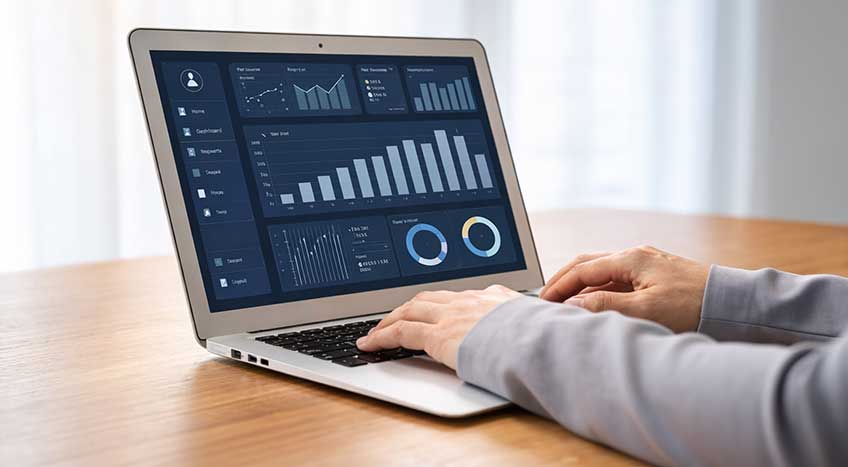
Discover how an Accounting Management System UAE helps businesses streamline financial operations, automate accounting tasks, manage expenses, and improve financial reporting.

Managing business finances accurately is essential for sustainable growth, operational efficiency, and informed decision-making. As businesses across the United Arab Emirates expand their operations, traditional accounting methods often struggle to meet the demands of modern financial management. An Accounting Management System UAE provides a structured digital solution for managing transactions, monitoring expenses, generating financial reports, and improving financial visibility.
From small businesses to established enterprises, organisations need reliable accounting processes to maintain financial transparency and support regulatory obligations. Modern accounting management software helps reduce repetitive administrative work, organise financial information, and provide management teams with timely insights.
By implementing an integrated financial management system, UAE businesses can strengthen accounting accuracy, streamline internal workflows, and establish a more efficient approach to financial administration.
What Is an Accounting Management System UAE?
An Accounting Management System UAE is a digital platform designed to organise, process, and monitor financial activities within a business. It combines essential accounting functions into a centralised environment, allowing finance teams to manage financial records efficiently.
Unlike traditional bookkeeping methods that depend heavily on manual spreadsheets, modern accounting systems support structured data entry, automated calculations, and consistent reporting processes. This shift from paper-based or disconnected spreadsheet workflows reduces the risk of inconsistencies and makes it easier for teams to maintain accurate, up-to-date records.
The primary functions of accounting management software include:
- General Ledger Management: Maintain organised financial records and track business transactions in a structured way.
- Accounts Payable: Monitor supplier invoices, outstanding payments, and financial obligations so that payment schedules remain clear.
- Accounts Receivable: Track customer invoices, payment collections, and outstanding balances to support healthier cash flow.
- Expense Management: Record operational expenses and monitor spending against planned budgets.
- Financial Reporting: Generate income statements, balance sheets, and cash flow reports that give management a clear view of performance.
- Bank Reconciliation: Compare accounting records with banking transactions to identify discrepancies early.
- Budget Monitoring: Track actual expenditure against approved budgets so that variances can be reviewed promptly.
These capabilities help businesses maintain financial consistency while reducing unnecessary administrative complexity. When records are organised in one place, finance teams spend less time searching for information and more time analysing results.
Why UAE Businesses Need Accounting Management Software
The UAE has a dynamic business environment supported by international trade, real estate, technology, healthcare, and professional services. As companies grow, their financial operations become increasingly complex. Managing multiple departments, business locations, and financial transactions requires more than basic bookkeeping.
A reliable business accounting system in Dubai and across the UAE enables organisations to establish consistent financial processes that scale with the business.
Improved Financial Accuracy
Manual accounting increases the possibility of calculation errors, duplicate entries, and incomplete records. Digital accounting systems reduce these issues through automated calculations, transaction validation, and standardised workflows. When data is entered once and processed consistently, the chance of human error drops significantly, supporting more reliable financial statements.
Better Financial Visibility
Business owners and finance managers need accurate information to evaluate performance. Centralised financial dashboards help teams monitor revenue, operating expenses, outstanding payments, and overall financial activity in near real time. This visibility supports faster, more confident decision-making because the numbers are current and accessible.
Efficient Business Operations
Accounting software reduces repetitive administrative tasks by connecting financial records with relevant business processes. This allows employees to concentrate on analysis, financial planning, and operational improvements rather than spending excessive time on data entry or reconciling spreadsheets. Over time, these efficiency gains free capacity for higher-value work.
Key Features of an Effective Accounting Management System UAE
Choosing suitable accounting management software requires understanding the capabilities that support daily financial operations. The following features are commonly valuable for UAE businesses of different sizes.
1. Centralised Financial Management
A centralised accounting platform brings financial information into one organised environment. Finance teams can access relevant records without continuously switching between disconnected spreadsheets and applications. This single source of truth improves consistency and reduces the risk of working with outdated or incomplete data.
2. Automated Invoicing and Payment Tracking
Invoice management is essential for maintaining healthy cash flow. Accounting software can help businesses:
- Create and organise customer invoices.
- Track outstanding customer payments.
- Monitor supplier payment obligations.
- Identify overdue accounts.
- Maintain structured payment histories.
These functions improve financial organisation and support more consistent collection processes. Clear visibility into receivables and payables helps management anticipate cash needs and avoid unnecessary delays.
3. Comprehensive Financial Reporting
Reliable reporting helps management understand business performance and identify opportunities for improvement. An effective financial management system supports reports covering profitability, expenses, account balances, and financial movements. When reports can be generated quickly and consistently, leadership can respond to trends rather than reacting only after problems become severe.
4. Budget and Expense Control
Monitoring expenses is essential for maintaining operational efficiency. Accounting systems allow businesses to categorise expenditure, compare actual costs against budgets, and evaluate spending across projects, departments, or business units. This structured approach makes it easier to identify areas where costs can be managed more carefully.
5. Multi-Company Accounting
Organisations managing multiple branches or legal entities require structured financial reporting. Multi-company accounting capabilities support separate financial records and consolidated management reporting, improving visibility across business operations. This is particularly useful for groups that need both entity-level detail and group-level summaries.
Accounting Management Systems and UAE Financial Compliance
Businesses operating in the UAE must maintain appropriate financial records and meet applicable tax obligations. VAT and Corporate Tax requirements make accurate accounting records particularly important. The Federal Tax Authority administers these obligations, while accounting information forms an important foundation for corporate tax calculations.
A well-structured accounting management system can support:
- Proper recording of taxable transactions.
- Organisation of invoices and supporting documents.
- Preparation of financial information for VAT reporting.
- Maintenance of records relevant to Corporate Tax.
- Clear transaction histories for financial reviews.
- Efficient preparation for internal and external audits.
However, accounting software does not automatically guarantee regulatory compliance. Businesses should verify that their chosen system supports relevant UAE requirements and seek qualified tax advice where necessary. Software is a tool that organises information; professional judgement and correct configuration remain essential.
Benefits of Cloud-Based Accounting Management Software
Cloud-based accounting solutions provide businesses with flexibility and improved access to financial information. Instead of relying entirely on local computers and disconnected files, authorised employees can work within a shared financial environment.
Important advantages include:
- Remote Accessibility: Access financial records from supported locations and devices when connectivity and permissions allow.
- Team Collaboration: Enable authorised employees to work with consistent financial information rather than multiple conflicting versions of spreadsheets.
- Data Organisation: Maintain accounting records within a structured digital platform that supports search, filtering, and reporting.
- Business Scalability: Support increasing transaction volumes and organisational requirements as the business grows.
- Operational Integration: Connect accounting activities with other business workflows where the chosen platform supports such connections.
Businesses should also evaluate security controls, backup procedures, access permissions, and data protection requirements when selecting a platform. Cloud solutions can offer strong safeguards, but responsibility for configuration, user access, and compliance still rests with the organisation.
How Accounting Software Supports Different UAE Industries
Accounting requirements differ depending on organisational structure, transaction volume, and industry-specific workflows. A flexible system can adapt to several common sectors in the UAE.
Real Estate
Property businesses benefit from connecting financial records with property operations, receivables, project expenses, and management reporting. Clear tracking of income and costs by property or project supports better performance analysis.
Retail and Trading
Businesses can organise supplier payments, customer invoices, operational expenses, and financial records associated with commercial transactions. This helps maintain accurate stock-related costs and margin visibility where inventory data is linked.
Healthcare
Medical organisations require structured financial oversight covering operational expenditure, payment records, and departmental reporting. Consistent recording of costs and revenues supports both operational control and regulatory documentation needs.
Professional Services
Consulting firms and service providers can monitor project-related expenses, customer payments, and financial performance. Time and project cost tracking, when available, further improves profitability analysis.
Growing Enterprises
Companies operating across multiple branches benefit from consistent financial procedures and consolidated reporting capabilities. Standardised processes reduce the risk of inconsistent practices across locations.
Choosing the Right Accounting Management System UAE
Selecting suitable software involves evaluating existing business processes alongside future operational requirements. Organisations should consider:
- Compatibility with existing business applications.
- Financial reporting and dashboard capabilities.
- User permissions and approval workflows.
- Support for UAE accounting and tax requirements.
- Multi-company accounting functionality.
- Implementation, training, and ongoing technical support.
A successful implementation should simplify financial management rather than introduce unnecessary complexity. Involving both finance and operational stakeholders during evaluation helps ensure the system matches real working practices.
Streamline Financial Operations with X-OPP
Effective financial management requires more than recording transactions. Businesses need connected workflows, transparent financial information, and reliable reporting capabilities.
X-OPP offers X-OPP Fin, an accounting management solution designed to connect financial activities with wider business operations. Its capabilities include general ledger management, receivables, payables, bank records, budget tracking, multi-company reporting, and operational integrations.
By connecting financial processes with relevant operational information, organisations can reduce duplicate data entry and improve management visibility. As with any system, results depend on correct configuration, trained users, and ongoing process discipline.
Frequently Asked Questions (FAQs)
1. What is the purpose of an Accounting Management System UAE?
An accounting management system helps UAE businesses organise transactions, manage expenses, monitor payments, and generate financial reports. It supports efficient bookkeeping, financial transparency, and better business decisions when used correctly.
2. Is accounting software important for small businesses in the UAE?
Yes. Accounting software helps small businesses maintain organised financial records, monitor cash flow, and manage invoices efficiently. It also supports business growth by establishing consistent financial procedures that can scale.
3. Can accounting management software support UAE VAT requirements?
Yes. Software with appropriate tax features can help organise VAT-related transactions, invoices, and reporting information. Businesses must still confirm that the system meets their specific regulatory obligations and seek professional advice where needed.
4. What are the advantages of automated accounting software?
Automated accounting software helps reduce repetitive data entry, improve calculation accuracy, organise financial records, and simplify reporting. It also allows finance teams to focus more on analysis and strategic financial planning.
5. How do businesses choose the best accounting management software in the UAE?
Businesses should evaluate financial features, operational integrations, reporting capabilities, security, scalability, and local regulatory requirements before selecting an accounting management solution. A clear assessment of current processes and future needs improves the likelihood of a suitable choice.
Conclusion
An Accounting Management System UAE plays an important role in helping businesses improve financial accuracy, operational efficiency, and financial visibility. By centralising accounting activities, streamlining reporting, and supporting structured financial processes, organisations can establish a stronger foundation for sustainable growth.
For businesses seeking integrated financial management, X-OPP provides connected accounting capabilities through X-OPP Fin, helping finance teams manage information more effectively across business operations when the system is properly implemented and used.
Turn lead response into a system.
Automatically route new leads, prioritize follow-ups and keep your sales team accountable without adding another layer of manual work.