
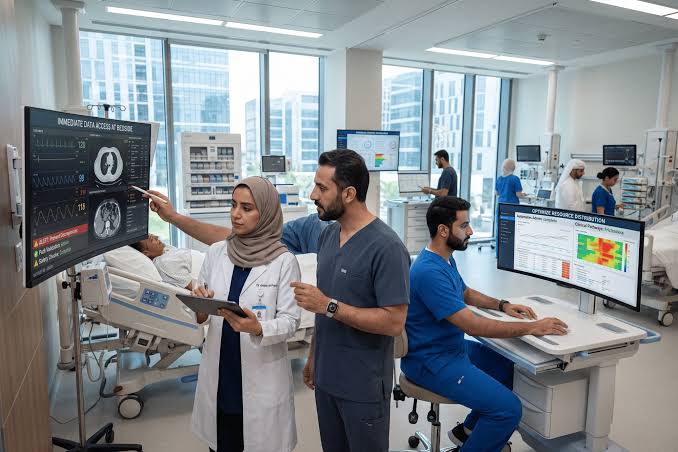
Discover how Healthcare Management Software UAE helps hospitals, clinics, and medical centres streamline patient management, automate administrative workflows, strengthen data security, and improve operational efficiency through integrated digital healthcare solutions.

The healthcare industry in the United Arab Emirates is undergoing a clear digital transformation. Hospitals, clinics, and medical centres across the country are adopting technology to handle growing patient volumes, complex administrative tasks, and rising expectations for coordinated care. As facilities expand services, managing patient information, appointments, medical records, billing, and day-to-day operations becomes more demanding. Healthcare Management Software UAE offers an integrated approach that helps organisations streamline these processes while supporting accuracy, security, and consistent service quality.
Modern platforms reduce administrative workload, improve communication between departments, and give authorised staff access to essential information through centralised systems. Whether a single clinic or a multi-location network, digital healthcare solutions create more efficient workflows and a more connected experience for patients and staff.
What Is Healthcare Management Software UAE?
Healthcare Management Software UAE refers to digital platforms designed to manage, automate, and coordinate administrative, clinical, and operational activities inside healthcare facilities. These systems bring core functions into one structured environment so authorised employees can handle information, monitor workflows, and support organisational productivity.
Typical capabilities include:
- Patient registration and profile management
- Appointment scheduling and consultation coordination
- Electronic medical records management
- Medical billing and insurance administration
- Healthcare inventory and equipment tracking
- Staff scheduling and administrative oversight
- Financial reporting and operational analytics
- Secure handling of patient information
By bringing these processes together, healthcare organisations can reduce repetitive tasks, lower the risk of manual errors, and create more consistent daily procedures.
Why Healthcare Management Software Is Essential in the UAE
The UAE continues to invest in healthcare infrastructure, medical facilities, and digital health initiatives. Providers face increasing expectations around accessibility, efficiency, and coordinated services. Traditional methods that rely on disconnected applications, paper records, and manual communication often lead to delays, duplicate entries, and operational gaps.
Healthcare management software creates connected workflows that support faster access to information and better coordination across teams. Organisations typically gain:
- Greater accuracy in patient records and administrative data
- Less paperwork and repetitive data entry
- Quicker appointment handling and patient registration
- Improved communication between clinical and administrative staff
- Clearer visibility into facility performance
- Better resource allocation and operational planning
These improvements align with the UAE’s broader goal of building a technologically advanced healthcare system.
Key Features of Healthcare Management Software UAE
Centralised Patient Management
Patient management forms the foundation of most healthcare software. A centralised system allows administrators to organise patient details, maintain registration information, and coordinate appointments. Authorised professionals can retrieve needed information efficiently, which supports continuity of care and reduces administrative delays.
Appointment Scheduling and Management
Efficient scheduling improves convenience for patients and helps facilities manage consultation capacity. Digital tools assist staff in organising bookings, tracking appointments, and aligning healthcare professionals’ availability. Automated reminders and structured workflows can reduce missed appointments and support clearer patient communication.
Electronic Medical Records Integration
Electronic Medical Records (EMR) systems store digital clinical information such as patient histories, diagnoses, treatment notes, and consultation records. When integrated with healthcare management software, these records become more accessible and support coordinated care. Interoperability matters in the UAE, where health information exchanges including NABIDH, Malaffi, and Riayati enable secure sharing between connected providers.
Medical Billing and Insurance Administration
Billing involves invoice preparation, payment tracking, insurance documentation, and financial reconciliation. Integrated workflows help facilities maintain organised financial records and improve coordination between patient administration and finance teams. Where supported, insurance-related features can simplify documentation and claims processes.
Healthcare Inventory and Equipment Management
Reliable supplies, medicines, and equipment are essential for uninterrupted services. Inventory management tools help administrators monitor stock levels, organise equipment records, and track resource needs. These functions support procurement planning and help avoid unnecessary disruptions.
Healthcare Reporting and Analytics
Reliable operational data allows administrators to identify inefficiencies and make informed decisions. Analytics capabilities commonly cover appointment volumes and patient flow, departmental workload, resource utilisation, billing activity, and broader operational trends. These insights support better planning and resource allocation.
Benefits of Implementing Healthcare Management Software
Adopting healthcare management technology delivers practical organisational advantages. Automated processes reduce repetitive administrative work so staff can focus on higher-value activities. Organised registration, scheduling, and communication improve the patient experience. Connected systems enable clinical, administrative, and financial teams to work from consistent information. Structured digital records help reduce duplication and inconsistencies that often arise with manual handling. Configurable platforms also support growth, additional departments, and expanding networks.
Together, these benefits help healthcare organisations create more efficient and responsive service environments.
Healthcare Data Security and Regulatory Considerations in the UAE
Healthcare information is highly sensitive. Privacy and security are essential when implementing any digital management platform. The UAE regulates health-related information technology through Federal Law No. 2 of 2019 concerning the use of ICT in health fields. Organisations must protect confidentiality, integrity, and authorised access to information.
When evaluating platforms, healthcare providers should consider:
- Role-based access control and user permissions
- Secure storage and transmission of patient data
- Audit trails and activity monitoring
- Data backup and recovery procedures
- Consent and information-sharing controls
- Compatibility with applicable UAE healthcare requirements
Providers should also review relevant emirate-specific policies and any integration obligations before deployment.
How X-OPP Supports Digital Healthcare Management
Selecting the right technology requires a clear understanding of an organisation’s operational workflows, administrative responsibilities, and growth plans. X-OPP, developed by Delemon Technology in Dubai, offers a connected business software ecosystem. Its healthcare-focused solutions include X-OPP Med for clinic and healthcare administration and X-OPP Cost for clinical costing and financial analysis.
X-OPP Med is designed to coordinate patient administration, appointments, records, billing, and operational oversight within a structured environment. The platform focuses on connecting healthcare workflows while aligning user permissions with staff responsibilities. By bringing administrative processes into connected digital workflows, X-OPP helps organisations gain greater operational visibility and more organised management practices.
The Future of Healthcare Management Software in the UAE
The next phase of healthcare management will involve greater use of intelligent automation, interoperable systems, predictive analytics, and digitally connected patient services. Artificial intelligence can help analyse operational patterns, identify scheduling inefficiencies, and forecast resource needs. Cloud-enabled platforms and secure integrations will continue to support collaboration across multiple locations.
Healthcare providers that invest in adaptable, secure management systems will be better prepared to meet changing operational requirements and patient expectations as digital transformation continues.
Frequently Asked Questions (FAQs)
1. What is Healthcare Management Software UAE?
It is a digital platform used by hospitals, clinics, and medical centres to manage patient registration, appointments, administrative records, billing, and operational activities within an organised system.
2. How does healthcare management software improve hospital efficiency?
It automates routine administrative tasks, centralises information, improves departmental coordination, and provides management reporting. These features help reduce manual workload and support smoother operations.
3. Is healthcare management software suitable for small clinics?
Yes. Suitable solutions exist for small clinics, specialist centres, and large organisations. The right choice depends on facility size, required features, existing systems, and operational complexity.
4. Can healthcare management software integrate with existing medical systems?
Many modern platforms support integrations with electronic medical records, accounting software, laboratory systems, and other healthcare applications. Availability depends on the platform, technical architecture, and applicable regulatory requirements.
5. Why is healthcare data security important in management software?
These systems process sensitive personal and medical information. Strong security controls help protect patient privacy, prevent unauthorised access, maintain data integrity, and support compliance with healthcare regulations.
Conclusion
Implementing Healthcare Management Software UAE is a practical step toward building efficient, connected, and digitally capable healthcare organisations. From patient administration and appointment scheduling to operational analytics and financial coordination, integrated software supports reliable management and improved productivity.
As healthcare technology evolves, selecting adaptable solutions will help medical facilities enhance efficiency, improve service coordination, and prepare for future growth. X-OPP supports this process through connected healthcare administration and business management solutions designed to streamline workflows and strengthen operational visibility across healthcare organisations.
Turn lead response into a system.
Automatically route new leads, prioritize follow-ups and keep your sales team accountable without adding another layer of manual work.