
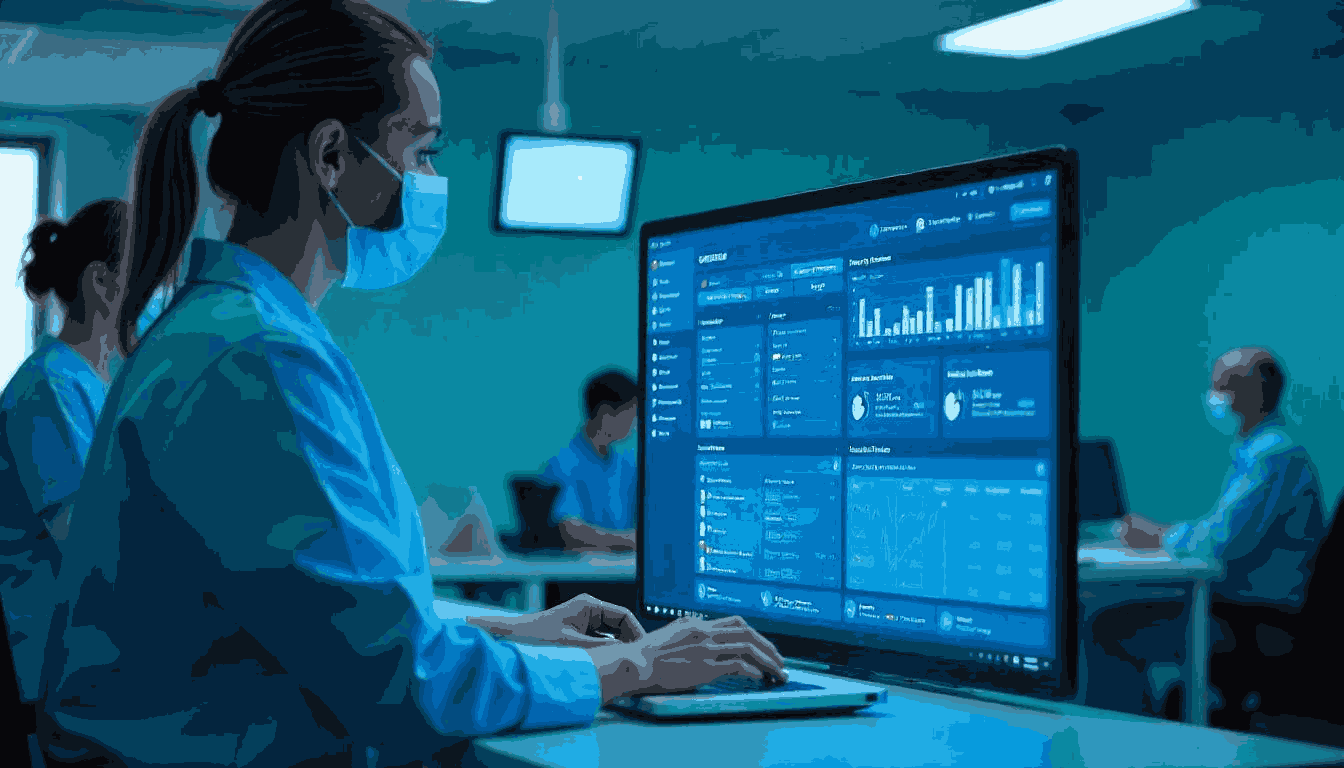
Hospital Administration Software helps hospitals manage patient records, appointments, billing, staff, inventory, and reporting through one centralised digital system.

Healthcare organisations manage a wide range of daily activities, from patient registration and appointment scheduling to billing, staff coordination, inventory control, reporting, and departmental communication. When these processes are handled manually or through disconnected systems, hospitals may face delays, duplicated work, administrative errors, and difficulty accessing accurate information.
Hospital Administration Software helps healthcare organisations bring important administrative functions into one centralised digital system. It can support smoother workflows, better coordination between departments, faster access to information, and more efficient day-to-day management.
For hospitals, clinics, diagnostic centres, and healthcare networks, adopting the right digital administration platform can improve operational efficiency while supporting future growth.
What Is Hospital Administration Software?
Hospital Administration Software is a digital platform designed to manage the administrative and operational activities of healthcare organisations.
It can connect different departments and provide a structured environment for managing patient information, appointments, admissions, billing, inventory, staff records, reports, and other administrative processes.
Instead of relying on separate spreadsheets, paper files, or multiple disconnected applications, healthcare teams can use one integrated system to manage important operational data.
A well-designed system can also be customised according to the size, workflow, departments, and requirements of a healthcare organisation.
Why Hospitals Need an Integrated Administration System
Hospitals handle large amounts of information every day. Patient details, doctor schedules, admission records, billing information, pharmacy stock, employee shifts, laboratory requests, and operational reports must all be organised accurately.
Without a centralised system, administration can become complicated as the organisation grows.
Common challenges include:
- Duplicate patient records
- Slow registration procedures
- Appointment conflicts
- Delayed billing
- Difficulty tracking payments
- Poor coordination between departments
- Manual inventory monitoring
- Inconsistent reports
- Staff scheduling issues
- Time-consuming paperwork
Hospital Administration Software helps reduce these challenges by creating a more organised and connected administrative environment.
Key Features of Hospital Administration Software
The exact features of a hospital system depend on the healthcare organisation's requirements. However, several core modules are commonly included.
Patient Registration and Record Management
Patient administration begins with accurate registration.
The software can create structured patient profiles that contain important administrative information such as personal details, contact information, appointment history, admission records, billing details, and other relevant data.
This reduces repetitive data entry and gives authorised employees faster access to patient information.
Appointment Scheduling
Managing appointments efficiently is important for both patients and healthcare professionals.
A digital scheduling module can help teams:
- Book patient appointments
- View doctor availability
- Manage consultation time slots
- Reschedule appointments
- Cancel appointments
- Track upcoming visits
- Reduce scheduling conflicts
- Organise departmental calendars
This makes appointment management more organised and can help reduce unnecessary waiting time.
Admission and Discharge Management
Inpatient administration requires coordination between reception, medical teams, nursing staff, billing departments, and management.
Hospital Administration Software can support the complete admission and discharge process.
The system can help manage:
- Patient admission records
- Bed or room allocation
- Department assignments
- Service records
- Billing information
- Administrative documentation
- Discharge status
Centralising this process improves visibility and reduces communication gaps between departments.
Billing and Financial Administration
Hospital billing can involve multiple services, including consultations, diagnostic tests, procedures, pharmacy purchases, room charges, and other treatments.
Manual billing can increase the risk of incorrect entries and delayed payments.
Hospital Administration Software can help automate and organise financial processes through features such as:
- Invoice generation
- Payment tracking
- Outstanding balance monitoring
- Service billing
- Transaction history
- Insurance administration
- Financial reports
- Department-wise billing records
Centralised billing improves transparency and helps finance teams manage transactions more effectively.
Pharmacy and Inventory Management
Hospitals need continuous access to medicines, medical supplies, equipment, and other resources.
A digital inventory module can help administrators monitor stock levels and movement in real time.
Key functions can include:
- Medicine stock tracking
- Medical supply management
- Purchase records
- Supplier management
- Stock alerts
- Batch tracking
- Expiry-date monitoring
- Inventory reports
- Stock movement records
Improved inventory visibility helps reduce unnecessary shortages, overstocking, and manual tracking.
Staff and Workforce Administration
Healthcare organisations employ professionals across multiple departments, including doctors, nurses, technicians, receptionists, administrative employees, and support teams.
Hospital Administration Software can help centralise workforce information and simplify administrative processes.
The system may support:
- Employee records
- Department assignments
- Shift schedules
- Attendance tracking
- Leave management
- Working hours
- Role management
- Staff availability
Centralised workforce management can improve coordination and make staff planning more efficient.
Reporting and Management Dashboards
Healthcare management teams need accurate information to evaluate performance and make informed decisions.
Hospital Administration Software can provide real-time dashboards and structured reports based on operational data.
Administrators may monitor:
- Number of patient registrations
- Daily appointment volumes
- Admission trends
- Billing performance
- Outstanding payments
- Inventory availability
- Department activity
- Staff utilisation
- Operational workload
Access to accurate reports can reduce dependence on manually prepared spreadsheets and improve management visibility.
Benefits of Hospital Administration Software
Implementing an integrated system can provide several benefits to healthcare organisations.
Improved Operational Efficiency
Automation reduces repetitive administrative work and allows employees to focus on higher-value tasks.
Better Department Coordination
A connected system enables authorised teams to access relevant information without depending on multiple disconnected systems.
Improved Data Accuracy
Centralising information reduces duplication and helps maintain consistent records across departments.
Faster Administrative Processes
Registration, scheduling, admission, billing, and discharge processes can become faster and easier to manage.
Better Resource Management
Hospitals can monitor staff, inventory, appointments, rooms, and other operational resources more effectively.
Improved Decision-Making
Real-time dashboards and reports give management teams better visibility into hospital operations.
Greater Scalability
A scalable software platform can support increasing numbers of users, departments, services, and facilities as the organisation grows.
Automation in Hospital Administration
Automation is becoming increasingly important in healthcare administration.
Many repetitive tasks can be automated to improve consistency and reduce administrative workload.
Examples include:
- Appointment reminders
- Invoice generation
- Stock alerts
- Approval workflows
- Report generation
- Notification systems
- Task assignments
- Administrative follow-ups
By reducing repetitive manual processes, hospitals can improve productivity and maintain more consistent workflows.
Custom Hospital Administration Software
Not every healthcare organisation works in the same way.
A multi-speciality hospital may require different workflows compared with a clinic, diagnostic centre, or healthcare network.
Custom Hospital Administration Software can be developed around specific organisational requirements.
Customisation may include:
- Department-specific modules
- Role-based dashboards
- Custom approval workflows
- Third-party system integrations
- Specialised reports
- Custom billing processes
- Unique patient workflows
- Multi-location administration
A customised system allows organisations to align the software with existing processes instead of forcing departments to completely change their workflow.
How to Choose the Right Hospital Administration Software
Selecting the right system requires careful evaluation.
Healthcare organisations should consider:
- Number of users
- Number of departments
- Required modules
- Integration requirements
- Reporting needs
- User access permissions
- Scalability
- Security requirements
- Ease of use
- Customisation flexibility
- Technical support
- Future expansion plans
The best system should not only solve current administrative challenges but also support future operational growth.
Importance of Data Security and Access Control
Hospital systems contain sensitive operational and patient-related information, making data protection an important consideration.
A modern Hospital Administration Software platform should include controlled access based on user responsibilities.
Role-based permissions help ensure that employees only access the information required for their work.
Additional security measures may include:
- User authentication
- Access controls
- Activity logs
- Data backup
- Secure data storage
- Permission management
A structured approach to access management helps healthcare organisations maintain stronger information governance.
The Future of Hospital Administration Software
Healthcare technology continues to evolve rapidly.
Modern hospital management platforms are increasingly incorporating cloud infrastructure, automation, analytics, mobile access, API integration, and intelligent digital tools.
Future-ready hospital systems may provide more advanced capabilities such as:
- Predictive operational analytics
- Automated workflow recommendations
- Mobile administration
- Integrated patient communication
- Real-time resource monitoring
- AI-assisted data analysis
- Multi-location management
These technologies can help healthcare organisations improve operational efficiency while preparing for changing industry requirements.
Why Digital Hospital Administration Matters
Efficient healthcare depends on efficient administration.
Even when a hospital provides high-quality medical services, poor administrative processes can lead to long waiting times, billing delays, scheduling conflicts, and communication problems.
Hospital Administration Software creates a structured digital foundation that helps connect departments and improve workflow visibility.
By bringing administrative processes into one system, healthcare organisations can create a more organised environment for patients, staff, and management teams.
Conclusion
Modern healthcare organisations require efficient and connected administrative systems to manage increasing operational complexity. Hospital Administration Software helps centralise patient registration, appointments, admissions, billing, workforce administration, inventory management, and reporting within one digital platform.
By reducing repetitive manual work, improving data accuracy, and supporting better coordination between departments, hospitals can operate more efficiently and deliver smoother administrative experiences.
The right system should be flexible, scalable, secure, and capable of adapting to changing healthcare workflows.
For healthcare organisations looking for customised digital solutions, X-Opp can support the development of scalable Hospital Administration Software designed around specific operational requirements, integrations, workflows, and future expansion goals.
Frequently Asked Questions
1. What is Hospital Administration Software?
Hospital Administration Software is a digital system used to manage administrative activities such as patient registration, appointments, admissions, billing, inventory, staff management, and reporting.
2. What are the main benefits of Hospital Administration Software?
Key benefits include improved efficiency, better data accuracy, faster administrative processes, improved department coordination, real-time reporting, and easier resource management.
3. Can Hospital Administration Software be customised?
Yes. Hospital software can be customised based on an organisation's departments, workflows, reporting requirements, integrations, and operational processes.
4. Can multiple departments use the same hospital administration system?
Yes. A centralised platform can support multiple departments while providing role-based permissions to control access to relevant information.
5. Is Hospital Administration Software suitable for growing hospitals?
Yes. Scalable software can support additional users, services, departments, facilities, and integrations as a healthcare organisation expands.
Turn lead response into a system.
Automatically route new leads, prioritize follow-ups and keep your sales team accountable without adding another layer of manual work.