
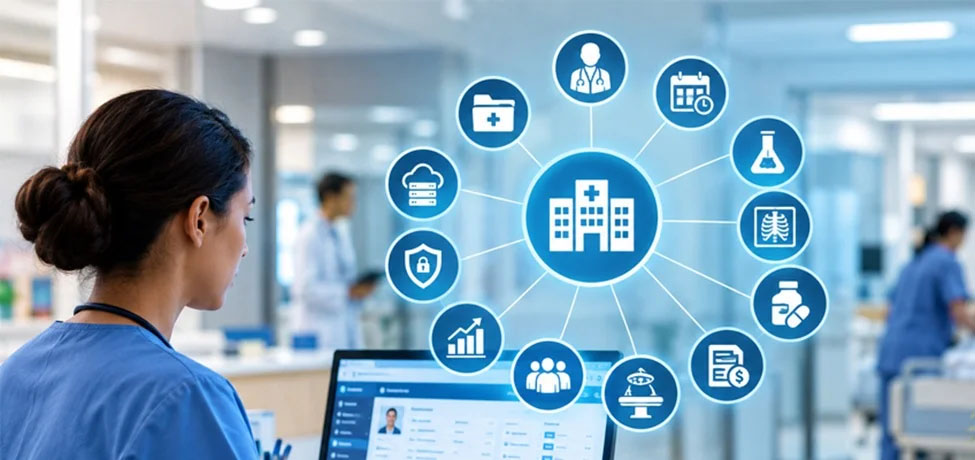
Discover how a Hospital Information Management System UAE helps healthcare organisations streamline patient records, automate administration, improve departmental coordination, and support secure digital healthcare operations.

The healthcare sector in the United Arab Emirates is rapidly embracing digital transformation to improve patient care, enhance operational efficiency, and streamline hospital administration. As healthcare organisations expand their services, managing patient records, appointments, medical departments, billing, and administrative activities becomes increasingly complex.
A Hospital Information Management System UAE provides an integrated digital solution that connects clinical, administrative, and operational processes within a centralised platform. By automating routine activities and improving access to information, hospitals can reduce manual workloads, strengthen departmental coordination, and deliver more efficient healthcare services.
From multispecialty hospitals to private medical centres, adopting advanced hospital management software is becoming an important step towards building a connected and technology-driven healthcare environment.
What Is a Hospital Information Management System?
A Hospital Information Management System (HIMS) is a comprehensive software solution designed to manage healthcare information, patient services, and hospital operations within one platform.
It integrates essential functions such as patient registration, electronic medical records, appointment scheduling, billing, pharmacy management, laboratory operations, and administrative reporting.
Unlike traditional paper-based systems, digital hospital management platforms allow authorised healthcare professionals to access relevant information efficiently.
A well-designed system helps healthcare organisations achieve several objectives:
- Centralise patient information and medical records.
- Automate hospital administrative processes.
- Improve communication between healthcare departments.
- Streamline appointment scheduling and patient registration.
- Manage billing, insurance, and financial transactions.
- Support accurate reporting and operational decisions.
By connecting these activities, hospitals can establish more efficient workflows and improve the overall patient experience. In the UAE context, where healthcare facilities often serve diverse patient populations and must meet high standards of service quality, such systems help reduce fragmentation between departments and create a more seamless operational environment. The shift from fragmented paper files and isolated departmental software to a unified platform supports better continuity of care and clearer accountability across clinical and administrative teams.
Key Features of Hospital Information Management System UAE
Modern healthcare facilities require flexible software solutions that support both clinical activities and administrative responsibilities. An effective Hospital Information Management System UAE should offer integrated modules that address different operational requirements. These modules work together so that information entered in one area becomes available where it is needed, subject to proper authorisation, reducing the need for repeated data entry and minimising the risk of inconsistencies.
Electronic Medical Records Management
Electronic Medical Records (EMR) systems maintain digital patient information, including medical history, diagnoses, prescriptions, treatment details, and clinical observations.
Healthcare professionals can access relevant records according to their assigned permissions, improving information availability and continuity of care. This structured digital approach supports clearer documentation, reduces reliance on paper charts, and helps clinicians review prior encounters more efficiently during consultations or when coordinating care across specialties.
Patient Registration and Appointment Scheduling
Automated patient registration and scheduling tools simplify appointment management and reduce administrative delays.
These solutions help hospitals manage doctor availability, patient appointments, consultation schedules, and follow-up visits. By providing clearer visibility of schedules, such tools can help reception teams allocate slots more effectively and reduce the administrative burden associated with manual booking processes.
Hospital Billing and Insurance Management
Integrated billing systems help manage consultation charges, medical procedures, invoicing, payments, and insurance-related workflows.
Healthcare organisations can improve financial record accuracy and reduce repetitive administrative tasks. Linking clinical activity to billing processes supports more consistent documentation of services rendered and can help streamline interactions with insurance providers when claims are prepared according to applicable procedures.
Pharmacy and Inventory Management
Pharmacy management modules support medicine stock monitoring, purchase records, inventory movements, and expiry-date tracking.
Effective inventory management helps healthcare facilities maintain stock visibility and minimise operational disruptions. Clear tracking of stock levels and movements contributes to more reliable availability of medications and related supplies for patient care.
Laboratory and Diagnostic Management
Laboratory Information System (LIS) integration supports diagnostic test requests, laboratory workflows, and result management.
Connected systems enable authorised medical professionals to review test information more efficiently. When laboratory processes are linked to the broader hospital information environment, clinicians can more readily access results that inform diagnosis and treatment decisions while maintaining appropriate controls over sensitive data.
Benefits of Hospital Information Management Software in UAE
Implementing hospital information management software can deliver important operational advantages for healthcare organisations operating in the UAE’s dynamic healthcare landscape.
Improved Operational Efficiency
Automation reduces repetitive manual activities and allows hospital employees to focus on essential responsibilities.
Digital workflows can improve coordination between reception teams, doctors, nurses, laboratories, pharmacies, and administrative departments. When routine tasks such as data entry, appointment confirmation, and basic reporting are supported by the system, staff can devote more attention to patient-facing and clinical activities.
Enhanced Patient Experience
Patients benefit from organised appointment scheduling, efficient registration, accessible medical histories, and improved communication between hospital departments. Clearer processes at the point of registration and during subsequent visits can contribute to smoother journeys through the healthcare facility and reduce delays caused by incomplete or hard-to-locate information.
Better Data Accuracy
Centralised information systems minimise unnecessary duplication of records and help maintain consistent information across connected departments. When authorised users work from a shared, up-to-date source of patient and operational data, the likelihood of conflicting entries decreases and the reliability of clinical and administrative records improves.
Improved Administrative Control
Hospital administrators can monitor operational activities through dashboards, reports, and performance indicators.
Major advantages include:
- Reduced administrative paperwork.
- Faster retrieval of authorised patient information.
- Better coordination between clinical departments.
- Improved inventory and resource visibility.
- More consistent billing and documentation.
- Greater transparency in operational reporting.
These capabilities support informed decision-making and more organised healthcare delivery. Administrators gain clearer visibility into resource utilisation, departmental activity levels, and areas where processes can be refined over time.
Healthcare Data Security and Compliance in the UAE
Healthcare information contains sensitive personal and medical details. Therefore, data security and regulatory compliance are important considerations when implementing hospital management software.
The UAE regulates healthcare information technology through Federal Law No. 2 of 2019 and its implementing regulations. Healthcare providers must protect patient confidentiality, preserve data integrity, and provide appropriate access to authorised users.
Important security considerations include:
- Role-based access control for healthcare employees.
- Encryption of sensitive information.
- Secure authentication and user permissions.
- Audit logs for tracking information access.
- Appropriate backup and recovery procedures.
- Compliance with applicable healthcare data regulations.
Healthcare facilities should also evaluate interoperability requirements for relevant health information exchange initiatives, including NABIDH in Dubai, Malaffi in Abu Dhabi, and Riayati at the national level.
Compliance should be assessed against the organisation’s licensing authority, operational requirements, and applicable data governance standards. Organisations implementing hospital information systems are expected to align technical controls and operational practices with these frameworks so that patient information remains protected while authorised clinical and administrative use is supported. Regular review of access rights, system logging, and recovery arrangements forms part of responsible system stewardship in this regulated environment.
How Hospital ERP Software Supports Healthcare Operations
Hospital Enterprise Resource Planning (ERP) software helps connect healthcare administration with financial, human resource, procurement, and inventory management processes.
While clinical information systems primarily support patient care workflows, ERP functionality provides broader visibility into organisational resources.
An integrated hospital ERP environment may support employee scheduling, departmental expenditure monitoring, supplier management, purchasing activities, and operational reporting.
For multispecialty hospitals and healthcare groups, this integration can improve coordination across departments and reduce dependence on disconnected software applications.
Hospital administrators can also use consolidated operational information to identify resource requirements, evaluate departmental performance, and plan organisational improvements. Linking clinical activity data with financial and resource information supports a more complete view of how services are delivered and resourced, which can inform planning and continuous improvement efforts.
Choosing the Right Hospital Management System in UAE
Selecting appropriate healthcare management software requires careful evaluation of organisational needs, technical capabilities, and long-term operational objectives.
Hospitals should prioritise solutions that support their existing workflows while allowing future expansion.
Important selection criteria include:
- Scalability: Ability to accommodate additional departments, users, and healthcare facilities.
- Customisation: Flexibility to support specific hospital workflows and administrative requirements.
- Integration: Compatibility with laboratory, pharmacy, accounting, and other healthcare applications.
- Security: Appropriate protection for sensitive healthcare and patient information.
- Usability: Accessible interfaces for medical and administrative employees.
- Reporting: Dashboards and analytics for operational monitoring.
- Technical support: Reliable implementation assistance, maintenance, and user training.
Before implementation, healthcare organisations should assess their current processes, establish software requirements, and evaluate potential integration challenges. A structured evaluation that involves clinical, administrative, and technical stakeholders helps ensure the selected system aligns with day-to-day realities and longer-term strategic goals. Attention to data migration, staff training, and phased rollout planning further supports successful adoption.
The Future of Digital Hospital Management in the UAE
Digital transformation continues to influence how hospitals manage information and deliver healthcare services.
Emerging technologies such as artificial intelligence, cloud computing, automation, and advanced analytics are creating opportunities to improve healthcare administration.
AI-assisted scheduling can help optimise appointment allocation, while analytics dashboards can support resource planning and operational forecasting.
Cloud-based systems may also improve accessibility and scalability when implemented with appropriate security, hosting, and regulatory safeguards.
Interoperability will remain particularly important as healthcare providers work towards more connected medical information environments.
Hospitals investing in adaptable digital infrastructure can strengthen their ability to respond to changing patient expectations and healthcare requirements. As national and emirate-level health information exchange initiatives mature, systems that support secure data sharing and standardised information exchange will be better positioned to participate in broader care coordination efforts while maintaining compliance with applicable rules.
Conclusion: Build Smarter Healthcare Operations with X-OPP
A modern Hospital Information Management System UAE plays an important role in improving healthcare administration, supporting patient information management, and connecting essential hospital operations.
By integrating clinical workflows, appointment scheduling, billing, inventory, and reporting, healthcare organisations can establish more efficient and coordinated working environments.
X-OPP provides healthcare-focused digital solutions designed to support hospital management and business process integration. Organisations exploring digital transformation can evaluate X-OPP’s capabilities against their specific clinical, administrative, security, and integration requirements.
Visit X-OPP to explore digital solutions for modern healthcare organisations.
Frequently Asked Questions (FAQs)
1. What is a Hospital Information Management System?
It is integrated software that manages patient information, appointments, billing, clinical workflows, and hospital administration.
2. Why do UAE hospitals need hospital management software?
It helps hospitals automate administrative tasks, improve departmental coordination, and manage healthcare information efficiently.
3. Is hospital information management software secure?
A properly implemented system can protect patient information through encryption, access controls, audit logs, and applicable regulatory safeguards.
4. Can hospital management software integrate with existing systems?
Yes. Many solutions support integration with laboratory, pharmacy, accounting, and electronic medical record applications.
5. How does a hospital information system improve patient care?
It supports faster access to authorised medical records, smoother appointments, and better coordination among healthcare professionals.
Turn lead response into a system.
Automatically route new leads, prioritize follow-ups and keep your sales team accountable without adding another layer of manual work.