
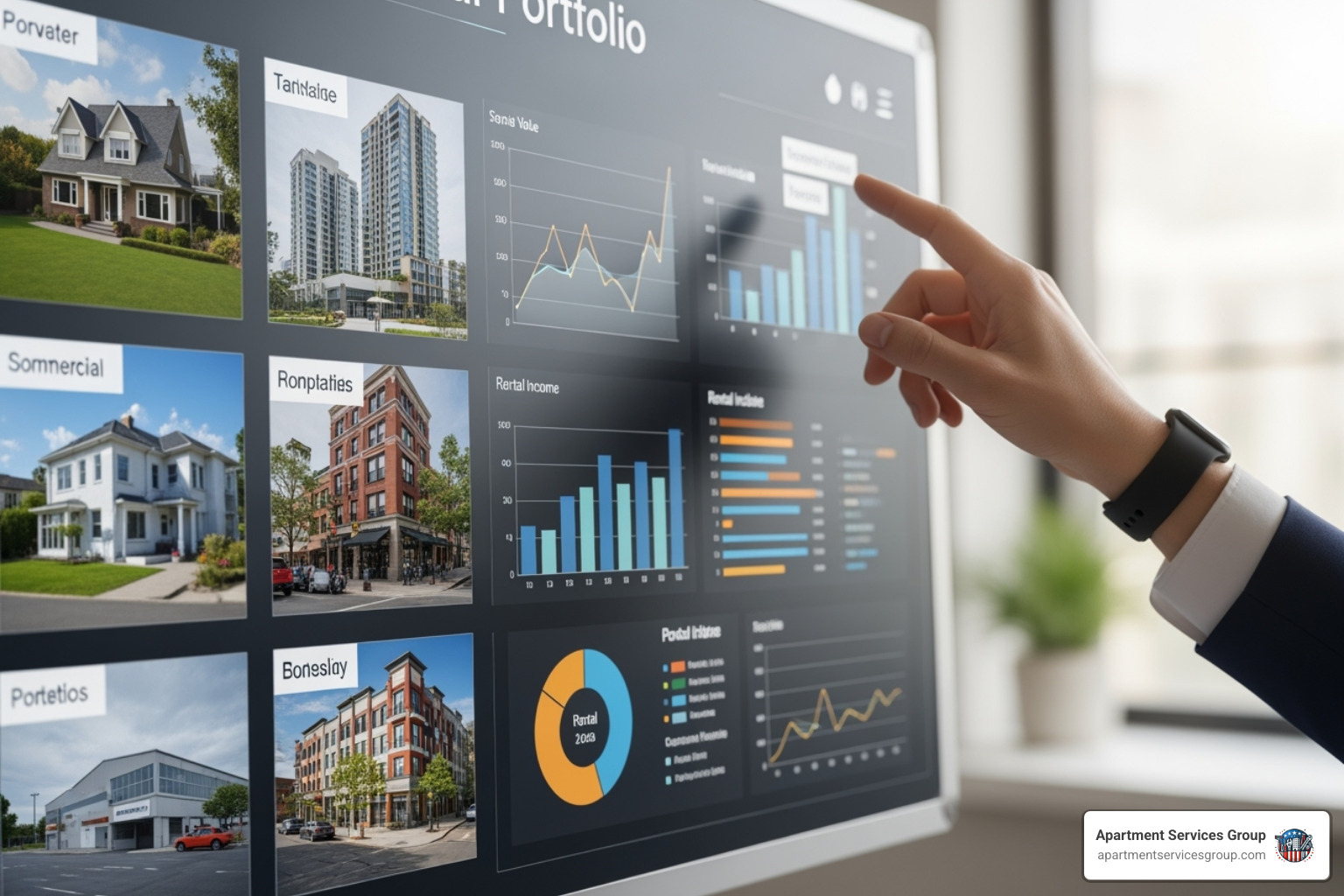
Discover how Property Portfolio Management Software UAE helps real estate businesses centralise property records, manage leases, monitor financial performance, automate workflows, and improve portfolio operations.

Managing multiple properties requires accurate information, organised workflows, and efficient communication. As real estate portfolios expand, handling property records, tenant information, lease agreements, maintenance requests, and financial reports becomes increasingly complex.
Property Portfolio Management Software UAE provides a centralised digital solution that helps property owners, real estate companies, asset managers, and investors manage their portfolios efficiently. Instead of relying on spreadsheets and disconnected systems, businesses can organise property operations through a unified platform.
From residential apartments and commercial buildings to mixed-use developments, modern property management technology improves operational visibility, reduces administrative work, and supports informed business decisions.
What Is Property Portfolio Management Software?
Property Portfolio Management Software is a digital platform designed to manage, monitor, and organise multiple real estate assets from a single system.
It brings together important information about properties, tenants, contracts, maintenance, occupancy, and financial performance. Property managers can access accurate records, automate repetitive activities, and monitor portfolio performance without switching between different applications.
The software is particularly useful for organisations managing properties across multiple locations.
Its primary functions include:
- Centralised property and asset information management
- Tenant records and lease agreement tracking
- Rental income and payment monitoring
- Property maintenance scheduling
- Occupancy and vacancy management
- Financial reporting and portfolio analytics
- Document storage and contract management
- Automated notifications and workflow management
By integrating these functions, businesses can improve coordination between property managers, accounting teams, landlords, and tenants.
Why Real Estate Businesses Need Property Portfolio Management Software
Managing a growing real estate portfolio involves several operational responsibilities. Without an organised system, businesses may experience fragmented information, delayed reporting, missed lease renewals, and inefficient communication.
Property Portfolio Management Software simplifies these activities by creating a structured environment for managing real estate assets.
Improved Operational Efficiency
Automated workflows reduce repetitive administrative tasks, allowing property management teams to focus on tenant relationships, maintenance coordination, and asset performance.
Centralised Property Information
Property details, ownership documents, rental agreements, payment records, and maintenance histories can be organised in one accessible location.
Better Financial Visibility
Portfolio managers can monitor rental collections, operational expenses, outstanding payments, and property-level financial performance through consolidated reporting.
Accurate Portfolio Monitoring
Real-time dashboards, where supported by the platform, help managers assess occupancy, vacancies, upcoming contract expirations, and operational activities.
These capabilities support consistent management practices across residential and commercial properties.
Key Features of Property Portfolio Management Software
Choosing an effective property portfolio management system requires understanding the features that support daily property operations and long-term asset management.
1. Centralised Property Database
A centralised database allows businesses to maintain structured records for every property within their portfolio.
Property information may include:
- Property location and ownership details
- Building specifications and unit configurations
- Property classification and occupancy status
- Lease agreements and supporting documents
- Maintenance history and inspection records
Organised records improve accessibility and reduce information duplication.
2. Tenant and Lease Management
Tenant and lease management tools help real estate businesses maintain rental relationships and monitor contractual responsibilities.
Managers can track lease commencement dates, expiry dates, security deposits, tenant information, and renewal activities.
Automated reminders can also help teams manage upcoming renewals and important contractual deadlines.
3. Rental Income and Financial Tracking
Financial monitoring is essential for evaluating property performance.
A property portfolio management system can help businesses monitor rental collections, outstanding balances, operating expenses, and income trends.
When integrated with appropriate accounting tools, it can also support financial reconciliation and reporting.
4. Maintenance and Facility Management
Property maintenance directly influences tenant satisfaction and asset condition.
Digital maintenance workflows allow managers to record service requests, assign responsibilities, monitor progress, and maintain service histories.
Preventive maintenance scheduling can help reduce unexpected operational disruptions.
5. Portfolio Reporting and Analytics
Reporting tools provide insights into operational activities and property performance.
Useful portfolio indicators include:
- Occupancy and vacancy rates
- Rental collection performance
- Property operating expenses
- Lease renewal schedules
- Net operating income
- Maintenance request resolution
- Property-level financial performance
These insights help managers identify operational improvements and evaluate portfolio performance.
Benefits of Cloud-Based Property Portfolio Management Software
Cloud-based property portfolio management solutions allow authorised users to access business information through an internet-connected platform.
This flexibility is valuable for real estate organisations operating across multiple branches, buildings, and geographic locations.
Important benefits include:
- Remote accessibility: Manage property information from different locations.
- Team collaboration: Improve coordination between departments.
- Scalability: Accommodate additional properties as portfolios expand.
- Data organisation: Maintain consistent and accessible digital records.
- Workflow automation: Reduce manual follow-ups and administrative delays.
- Reporting efficiency: Generate consolidated operational information.
Secure access controls, appropriate backups, and data protection measures are important considerations when implementing a cloud-based system.
Property Portfolio Management Software for Residential and Commercial Real Estate
Different property categories have different management requirements.
Residential property managers typically focus on tenant communication, rental agreements, occupancy monitoring, maintenance coordination, and recurring rental collections.
Commercial property managers may need additional capabilities for complex lease structures, service charges, multiple occupants, and property-specific reporting requirements.
A flexible real estate portfolio management solution can support these operational differences through configurable workflows and structured data management.
For businesses managing mixed-use developments, integrated software can provide a consolidated view of different property types while maintaining their individual records.
How Property Portfolio Management Software Supports Investment Decisions
Effective property investment management requires more than tracking rental payments.
Investors and asset managers need reliable information about portfolio income, expenses, occupancy, lease commitments, and operational performance.
Property Portfolio Management Software helps consolidate this information into meaningful reports.
Historical records and performance dashboards can support comparisons between individual properties, buildings, and portfolio segments.
By reviewing relevant financial and operational indicators, decision-makers can identify underperforming assets, assess income stability, and plan improvements.
However, investment decisions should also consider market conditions, valuation data, financing obligations, and independent financial analysis.
How to Choose the Right Property Portfolio Management Software
Selecting the right solution requires evaluating business requirements, operational complexity, and future expansion plans.
Consider the following factors:
- Portfolio size: Determine whether the system can support existing and future properties.
- Essential features: Prioritise lease management, accounting, maintenance, and reporting.
- Ease of use: Choose an interface that supports efficient daily operations.
- Integration capabilities: Assess compatibility with accounting, CRM, and other business systems.
- Data security: Review access permissions, backup arrangements, and security controls.
- Customisation: Consider whether workflows can be adapted to business requirements.
- Technical support: Evaluate implementation assistance and ongoing system maintenance.
A suitable solution should simplify operations without introducing unnecessary complexity.
The Future of Real Estate Portfolio Management
Digital transformation continues to influence how real estate assets are managed.
Automation, integrated reporting, cloud technology, and advanced analytics are helping businesses improve operational coordination and information accessibility.
Emerging capabilities such as artificial intelligence-assisted reporting, predictive maintenance, and intelligent workflow management may further improve property operations.
Organisations adopting scalable management systems can establish a stronger foundation for managing increasingly complex real estate portfolios.
Conclusion
Property Portfolio Management Software UAE helps real estate businesses organise property records, manage leases, monitor financial activities, coordinate maintenance, and evaluate portfolio performance.
By replacing fragmented processes with centralised digital workflows, organisations can improve operational efficiency and establish more consistent management practices.
Real estate businesses exploring integrated portfolio management requirements can visit X-OPP to learn more about its software solutions.
Frequently Asked Questions (FAQs)
- What is Property Portfolio Management Software?
It is a digital system that centralises property records, lease information, financial tracking, maintenance activities, and portfolio reporting. - Who can use Property Portfolio Management Software?
Property owners, landlords, asset managers, real estate agencies, and organisations managing residential or commercial portfolios can use it. - Can Property Portfolio Management Software track rental income?
Yes. Software with financial management features can monitor rental collections, outstanding payments, operating expenses, and income reports. - Is cloud-based property management software secure?
Security depends on the provider's safeguards, including encryption, access controls, backups, and appropriate data protection practices. - How does Property Portfolio Management Software improve efficiency?
It reduces manual administration through centralised records, automated reminders, organised maintenance workflows, and consolidated reporting.
Turn lead response into a system.
Automatically route new leads, prioritize follow-ups and keep your sales team accountable without adding another layer of manual work.